Designing a Living Room You'll Actually Live In
Your living room isn't just a room — it's the heart of your home. It's where you unwind after a long day, gather with the people you love, and quietly rack up most of your best memories. Having worked on living rooms across Wimbledon, Richmond, Kingston and further into Surrey, I've learned that a beautiful living room isn't just about how it looks — it's about designing a space that actually works for how you live.
London throws up a particular set of challenges here. A Victorian terrace in Wimbledon and a riverside apartment in Kingston need completely different approaches to the same brief. Period proportions, low ceiling heights in converted flats, awkward chimney breasts, bay windows that eat into your layout — the "right" living room design depends enormously on the bones of the building you're starting with.
So if you're looking to create a living room that's as functional as it is stylish, here's how to approach it properly.
1. Start with a Purposeful Layout
Before diving into fabrics and furniture, think about how you really use this space. Is it your go-to spot for entertaining? A cozy retreat for reading? A family hub for movie nights? Defining the purpose of the room helps you create a layout that makes sense.
If space allows, consider multiple zones—one for conversation, another for TV time, maybe even a cozy reading nook. A well-planned layout prevents the room from feeling cluttered or disconnected.
Example: In our Wimbledon project, we’ve created zones that balance conversation, TV, and reading area seamlessly.
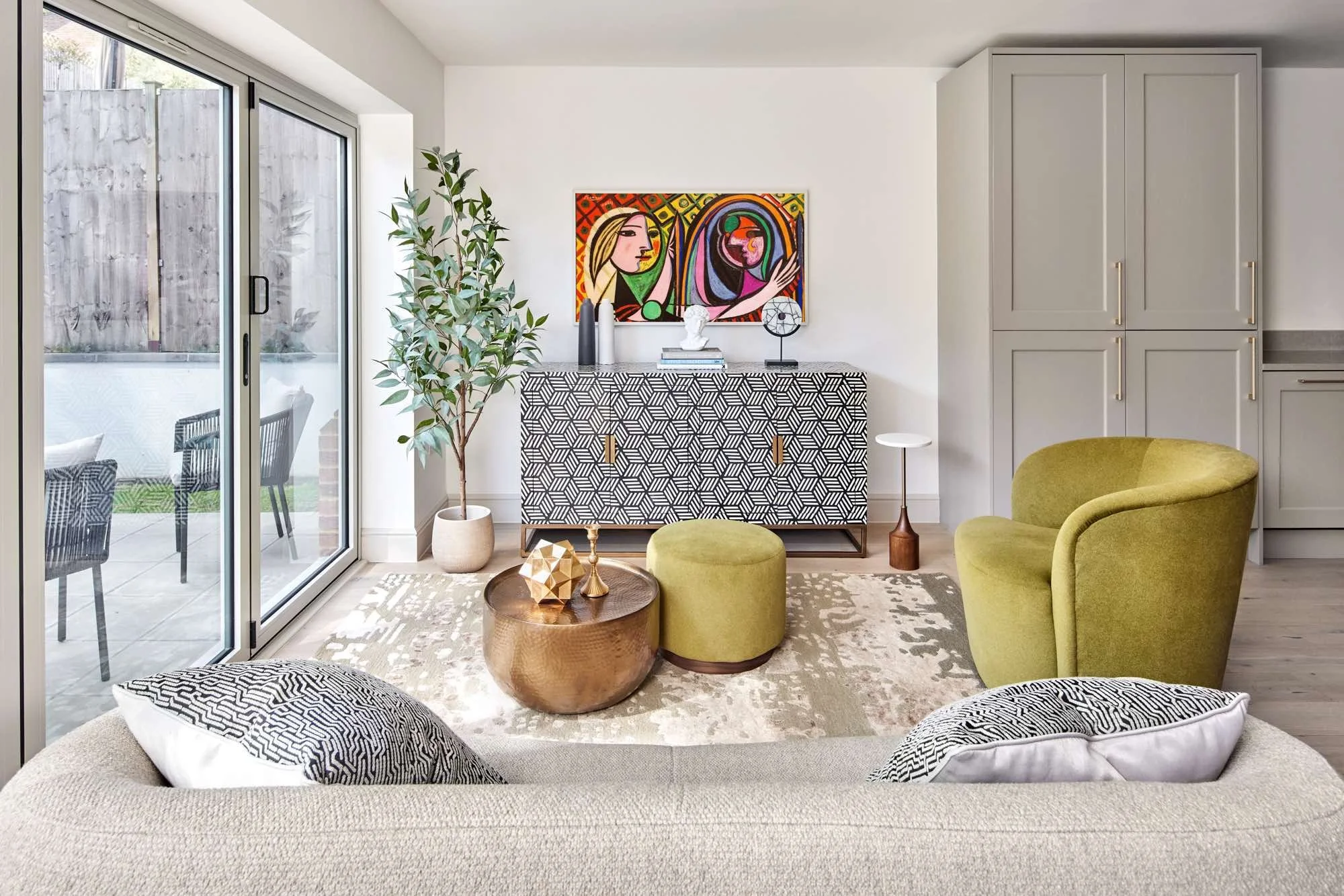
Image credit: Mond Design Interiors
For a deeper look at getting this right — including how to test a layout before committing to furniture — see our guide to space planning.
2. Lighting: The Secret Ingredient
Lighting can make or break a room, and it's one detail people consistently underestimate. Layering different types — overhead fixtures, floor and table lamps, wall sconces — adds depth and warmth that a single central pendant never will.
This is where period housing stock across places like Kingston and Richmond adds its own complications: original ceiling roses and cornicing can restrict where you're able to run new wiring without disturbing the plasterwork, so lighting plans often need to be agreed early, before any other design decisions, not bolted on at the end.
Pro tip: if you're planning floor-mounted sockets for lamps, double-check furniture placement first. There's nothing more frustrating than a beautifully positioned reading chair with no way to actually plug in the lamp beside it.
3. Make Smart Furniture Choices
A gorgeous sofa that doesn't fit your lifestyle is a waste of money. A coffee table that's too far from the seating is just a design mistake wearing nice fabric. A well-designed living room balances style with practicality, every time.
Make sure every seat has a nearby surface — a coffee table, a side table, an ottoman — so there's always somewhere to put down a book or a drink. And don't overlook storage: built-ins either side of a chimney breast, a well-chosen credenza, or a storage ottoman can keep clutter in check without compromising the look of the room. In smaller London flats and conversions, this is often the difference between a living room that feels calm and one that feels cramped, regardless of how good the furniture itself is.
4. Choose Materials That Match Your Life
Your living room should be designed for real life. If you've got pets, young children, or a habit of eating dinner on the sofa (no judgement), opt for durable fabrics — performance velvet, leather, or washable slipcovers are all worth the conversation with your designer.
Light-coloured furniture is still entirely doable — just look for stain-resistant or washable options rather than ruling it out. The goal is a space you actually want to use, not one you're nervous of letting your family sit in.
5. Get the Rug Right
A rug has the power to pull a whole room together — but only if it's the right size. A too-small rug makes a room feel disconnected and awkward; a well-proportioned one anchors the entire space.
Rule of thumb: at least the front legs of your furniture should sit on the rug. It's a small detail, but it's the single most common mistake we see in living rooms that otherwise have all the right pieces.
6. Art: The Soul of the Room
No living room feels complete without art. It’s what gives the space personality and makes it yours. Whether it’s a statement piece above the sofa, a gallery wall of your favorite moments, or a mix of different styles, the key is to choose art that speaks to you.
In our Wimbledon project, art is always selected to enhance both character and warmth in the space.
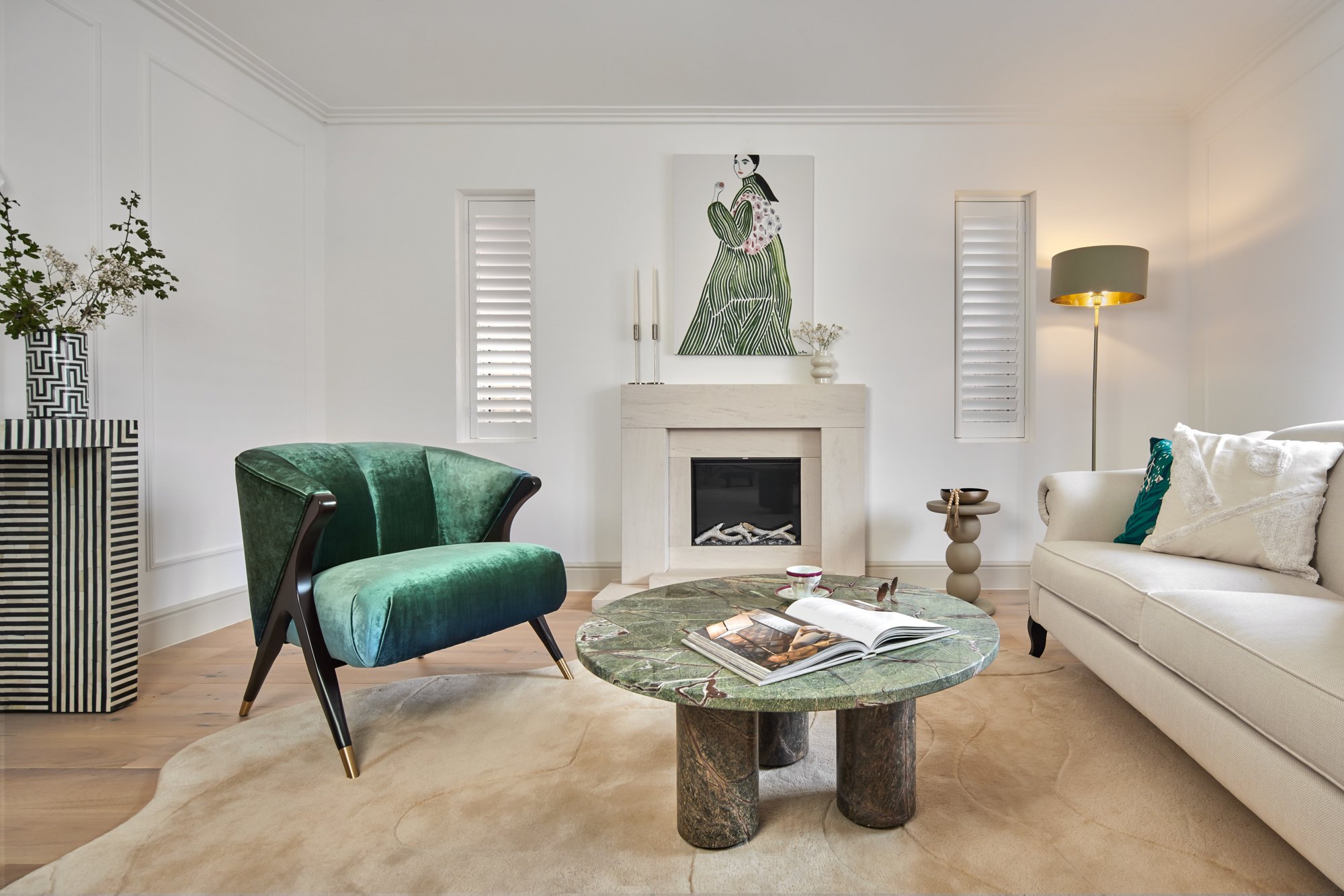
Image credit: Mond Design Interiors
How you arrange art also comes down to balance — whether you want the calm symmetry of a piece centred above the fireplace, or the energy of an asymmetrical gallery wall.
Our guide to symmetrical and asymmetrical balance covers both approaches in more detail.
Create a Space That Feels Like You
At the end of the day, a well-designed living room isn’t about following trends—it’s about creating a space that feels effortless, welcoming, and uniquely yours. Thoughtful planning, functional choices, and personal touches will ensure your living room isn’t just a place to look at, but a place to truly live in.
Whether you're working with a period terrace in Wimbledon, a riverside apartment in Kingston, or a family home in Richmond, Putney, Battersea, Cobham or Kensington, we'd love to help you get there. Book a free consultation and let's talk through your space.